
The Rise and Fall of Auris health: A Lux Capital Venture
Auris Health, a medical robotics company promising to revolutionize surgical procedures, captivated the imagination of investors and the medical community alike. Backed by the prominent venture capital firm Lux Capital, Auris embarked on an ambitious journey to develop advanced robotic systems for minimally invasive interventions. However, the company’s trajectory, marked by initial triumphs and eventual acquisition, reveals a complex narrative of technological innovation, market dynamics, and the inherent risks of high-stakes healthcare ventures.
The Genesis of Auris Health: A Vision of Robotic Surgery
Auris Health was founded in 2011 by Dr. Fred Moll, a pioneer in surgical robotics and the co-founder of Intuitive Surgical, the company behind the widely used da Vinci surgical system. Moll’s vision for Auris was to create a more versatile and accessible robotic platform, capable of addressing a broader range of surgical procedures. This ambition stemmed from a recognition of the limitations of existing robotic systems, particularly in areas like pulmonary interventions and diagnostic procedures.
Lux Capital’s Investment: Betting on Disruptive Technology
Lux Capital, known for its focus on deep technology investments, recognized the transformative potential of Auris’s platform. The firm’s investment in Auris reflected its belief in the company’s ability to disrupt the medical robotics landscape. Lux Capital’s partners saw in Moll a visionary leader with a proven track record, and in Auris’s technology, a genuine breakthrough.
The Monarch Platform: A Leap Forward in Pulmonary Robotics
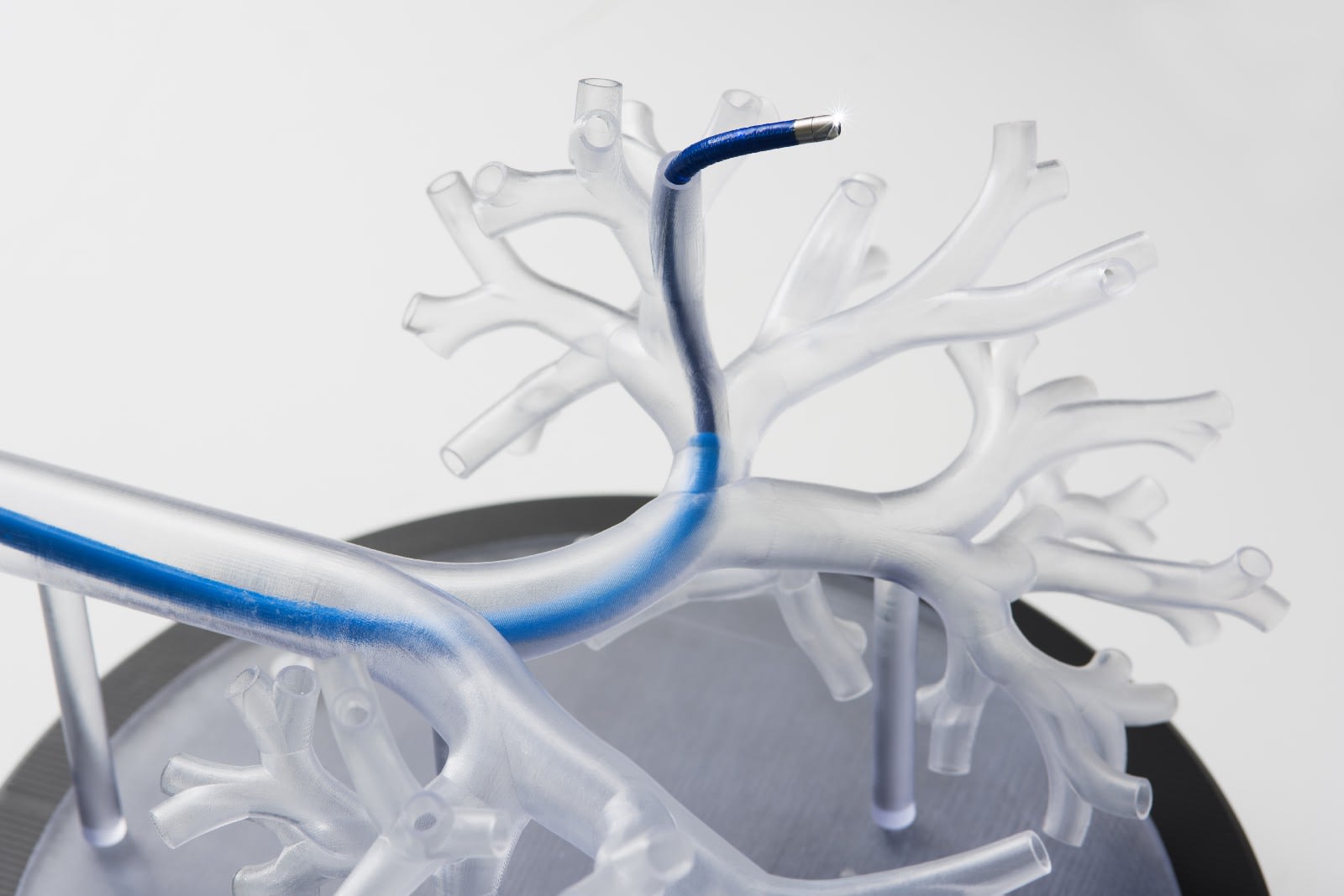
Auris’s flagship product, the Monarch platform, was designed to enable minimally invasive diagnostic and therapeutic bronchoscopy. This system employed a flexible robotic endoscope, navigated using a handheld controller, to reach deep into the lungs. The Monarch’s ability to access previously unreachable areas of the lung held the promise of earlier and more accurate diagnoses of lung cancer and other pulmonary diseases.
Key Features of the Monarch Platform:

Enhanced Navigation: The system’s flexible robotic endoscope and advanced imaging capabilities provided surgeons with precise control and visualization.
The Promise of Early Lung Cancer Detection
Lung cancer remains a leading cause of cancer-related deaths worldwide. Early detection is crucial for improving patient outcomes, but traditional diagnostic methods have limitations. The Monarch platform aimed to address this challenge by providing a more effective and less invasive way to access and biopsy suspicious lung nodules.
Clinical Trials and Regulatory Approvals: Milestones Achieved
Auris Health conducted extensive clinical trials to evaluate the safety and efficacy of the Monarch platform. The results of these trials were promising, demonstrating the system’s ability to improve diagnostic yield and access previously unreachable areas of the lung. In 2018, the Monarch platform received FDA clearance, marking a significant milestone for the company.
The Acquisition by Johnson & Johnson: A Strategic Move

In 2019, Johnson & Johnson (J&J) acquired Auris Health for $3.4 billion, a testament to the company’s technological advancements and market potential. J&J’s acquisition of Auris was part of its broader strategy to expand its presence in the surgical robotics market.
J&J’s Vision for Surgical Robotics: Integrating Auris’s Technology
J&J’s acquisition of Auris was driven by its desire to integrate the Monarch platform into its broader portfolio of surgical technologies. The company saw the potential to leverage Auris’s robotic expertise to develop new solutions for a wide range of surgical specialties.
Challenges and Market Dynamics: Navigating a Competitive Landscape
Despite its technological advancements and strategic acquisition, Auris Health faced several challenges. The medical robotics market is highly competitive, with established players and emerging startups vying for market share. The adoption of new robotic technologies can also be slow, as hospitals and surgeons require time to evaluate and integrate these systems into their practices.
The Cost of Innovation: Balancing Development and Adoption
The development of advanced medical robotics systems is a costly and time-consuming process. Auris Health invested heavily in research and development, clinical trials, and regulatory approvals. The company also faced the challenge of balancing the cost of innovation with the need to make its technology accessible to a wide range of healthcare providers.
The Impact of the COVID-19 Pandemic: Shifting Priorities
The COVID-19 pandemic had a significant impact on the healthcare industry, shifting priorities and disrupting clinical workflows. The pandemic may have slowed the adoption of new robotic technologies, as hospitals focused on managing the surge in COVID-19 patients.
The Legacy of Auris Health: Advancing the Field of Surgical Robotics
Despite the challenges it faced, Auris Health made significant contributions to the field of surgical robotics. The company’s development of the Monarch platform demonstrated the potential of robotics to improve minimally invasive procedures and patient outcomes.
Lessons Learned: The Importance of Innovation and Strategic Partnerships
The Auris Health story provides valuable lessons for entrepreneurs and investors in the medical technology space. The company’s success highlights the importance of innovation, strategic partnerships, and a clear vision for the future. It also underscores the inherent risks of high-stakes healthcare ventures and the need to navigate a complex regulatory and market landscape.
Lux Capital’s Investment Strategy: A Focus on Deep Technology
Lux Capital’s investment in Auris Health reflects its broader investment strategy, which focuses on supporting companies developing disruptive technologies in areas such as healthcare, energy, and artificial intelligence. The firm’s partners are known for their deep technical expertise and their ability to identify and support promising startups.
The Future of Surgical Robotics: Continued Innovation and Advancement
The field of surgical robotics is rapidly evolving, with ongoing advancements in areas such as artificial intelligence, machine learning, and haptic feedback. These advancements are expected to lead to the development of more sophisticated and versatile robotic systems, capable of performing a wider range of surgical procedures.
The Role of Venture Capital: Fueling Innovation in Healthcare
Venture capital plays a crucial role in fueling innovation in the healthcare industry. Firms like Lux Capital provide the funding and expertise needed to support the development of groundbreaking technologies. As the healthcare landscape continues to evolve, venture capital will remain a vital source of capital for startups seeking to disrupt the status quo.
Auris Health’s Impact on Patient Care: Improving Outcomes and Accessibility
Auris Health’s legacy extends beyond its technological achievements. The company’s work has the potential to improve patient outcomes by enabling earlier and more accurate diagnoses of lung cancer and other pulmonary diseases. The Monarch platform’s minimally invasive design also has the potential to reduce patient trauma and recovery time, making surgical interventions more accessible to a wider range of patients.
The Evolution of Robotic Bronchoscopy: From Research to Clinical Practice
Robotic bronchoscopy has evolved significantly in recent years, thanks in part to the efforts of companies like Auris Health. The technology is now being used in clinical practice to diagnose and treat a variety of pulmonary conditions. As the technology continues to advance, it is expected to become an increasingly important tool for pulmonologists and thoracic surgeons.
The Ongoing Development of the Monarch Platform: J&J’s Continued Investment
Following its acquisition of Auris Health, J&J has continued to invest in the development of the Monarch platform. The company is working to expand the platform’s capabilities and explore new applications for the technology. This ongoing investment reflects J&J’s commitment to advancing the field of surgical robotics and improving patient care.
The Future of Lux Capital’s Healthcare Investments: Continued Focus on Innovation
Lux Capital continues to invest in companies developing innovative healthcare technologies. The firm’s partners are committed to supporting entrepreneurs who are pushing the boundaries of what is possible in areas such as genomics, diagnostics, and therapeutics. Lux Capital’s investments reflect its belief in the power of technology to transform healthcare and improve the lives of patients.
:max_bytes(150000):strip_icc()/EW-Meal-Plans-Healthy-Weight-Gain-Day-4-1x1-alt-81577102cff74485ac146541976d8b22.jpg?resize=200,135&ssl=1 "Fueling Up: High-Protein Meals For Healthy Weight Gain")

